
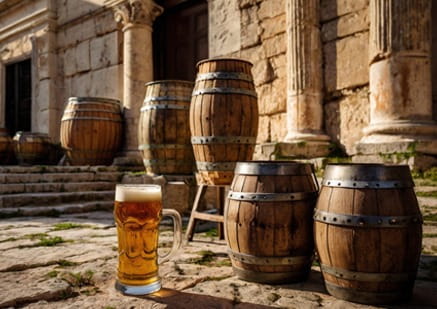
History of the Origin of Beer
The History of the Origins of Beer
Malt beverage is one of the oldest and most widely consumed drinks in the world, with a history stretching back thousands of years. This ancient drink has not only played an important role in various cultures, but its development and evolution also reflect the technological and cultural progress of human societies. In this article, we'll explore the history of beer's origins and its stages of evolution from ancient times to today.
The Beginning of the Story: Ancient Times
Malt beverage, as one of the earliest fermented drinks, has a very long history. The oldest evidence of beer production dates back to around 7000 BCE. Interestingly, according to existing documentation, the earliest examples were produced in ancient Iran. In these regions, early humans accidentally discovered grain fermentation and began producing beer-like beverages.
Around 4000 BCE, the Sumerians in Mesopotamia began producing malt beverages and regarded this drink as a gift from the gods. The Sumerians not only drank beer but also used it in their religious ceremonies and celebrations. One of the earliest known writings referencing beer is the "Hymn to Ninkasi," dedicated to the goddess of beer.
Ancient Egypt and Beer
In ancient Egypt, beer was also one of the primary beverages. Egyptians used barley to produce beer, and it became part of the population's daily diet. The workers who built the pyramids of Egypt received a daily ration of beer to provide the energy needed for their strenuous labor. Beer was also used in religious rituals and as an offering to the gods.
Beer in Greece and Rome
This beverage was also popular in ancient Greece and Rome. The Greeks and Romans mostly drank wine, but beer was also consumed as an everyday drink among the lower classes of society. During this period, beer production techniques improved, making larger-scale production possible.
The Middle Ages: A Period of Transformation
In the Middle Ages, beer played an important role in European society. Monks in Christian monasteries were among the largest producers of beer. By using hops as an ingredient to preserve beer and enhance its flavor, they made significant innovations in the production of this beverage. Hops not only helped flavor the beer but also acted as a natural preservative against spoilage. This innovation led to beer with a longer shelf life and better flavor.
The Renaissance and the Industrial Revolution
During the Renaissance, as trade and international relations expanded, the production and consumption of beer also increased. European merchants and travelers introduced beer to different parts of the world, and the drink gradually gained popularity in other countries as well. With the start of the Industrial Revolution in the eighteenth century, beer production changed dramatically. New inventions such as the steam engine and industrial production processes enabled beer to be produced on a much larger scale. These changes not only increased beer production but also improved its quality and consistency.
The Twentieth Century and Modern Developments
In the twentieth century, beer production became a global industry. During this time, modern techniques for producing, packaging, and distributing beer also developed, giving consumers easier access to a wide variety of beers.
Beer in the Twenty-First Century
Today, beer remains one of the most popular beverages in the world. With the rise of a new wave of craft beer producers, consumers now have access to a greater variety of flavors and styles. Small, independent beer producers use traditional and creative methods to create beverages with unique flavors that have captured the attention of many beer enthusiasts.
The Global Growth of Halal Beer
Halal beer, a beverage from which alcohol is removed through special processes to make it suitable for Muslim consumers or others who avoid alcohol for different reasons, has grown increasingly popular in recent years. Several factors contribute to this appeal, including growing health awareness, a desire for a healthier lifestyle, and the wide variety of flavors available in halal malt beverages. Halal beer is currently being produced in many countries around the world, including Iran, Turkey, Indonesia, Malaysia, Qatar, and the United Arab Emirates. Major international beer producers such as EFES have also taken notice of this emerging market and now offer their own halal products. Beyond Muslim consumers, other individuals also choose non-alcoholic or low-alcohol beers for various reasons, including driving, pregnancy, medication use, or personal preference. This is fueling the global growth of the halal beer market. The current annual global production of halal malt beverage is estimated at around 30 billion liters, and given the investments being made and the presence of major global brands in this market, production and variety are expected to continue growing in the coming years.

Kilos, a specialized producer of barley malt extract for the food and beverage industries in Iran and international markets
2026 Kilos Food Industries Complex - All rights reserved